Templeton Project, Chapman & Bailey
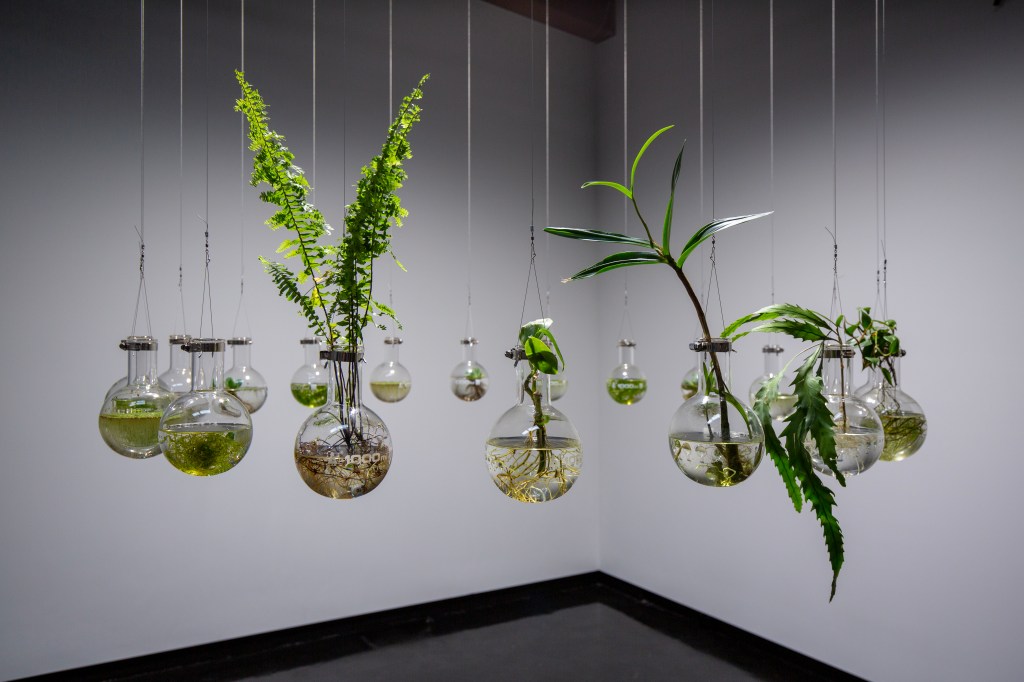
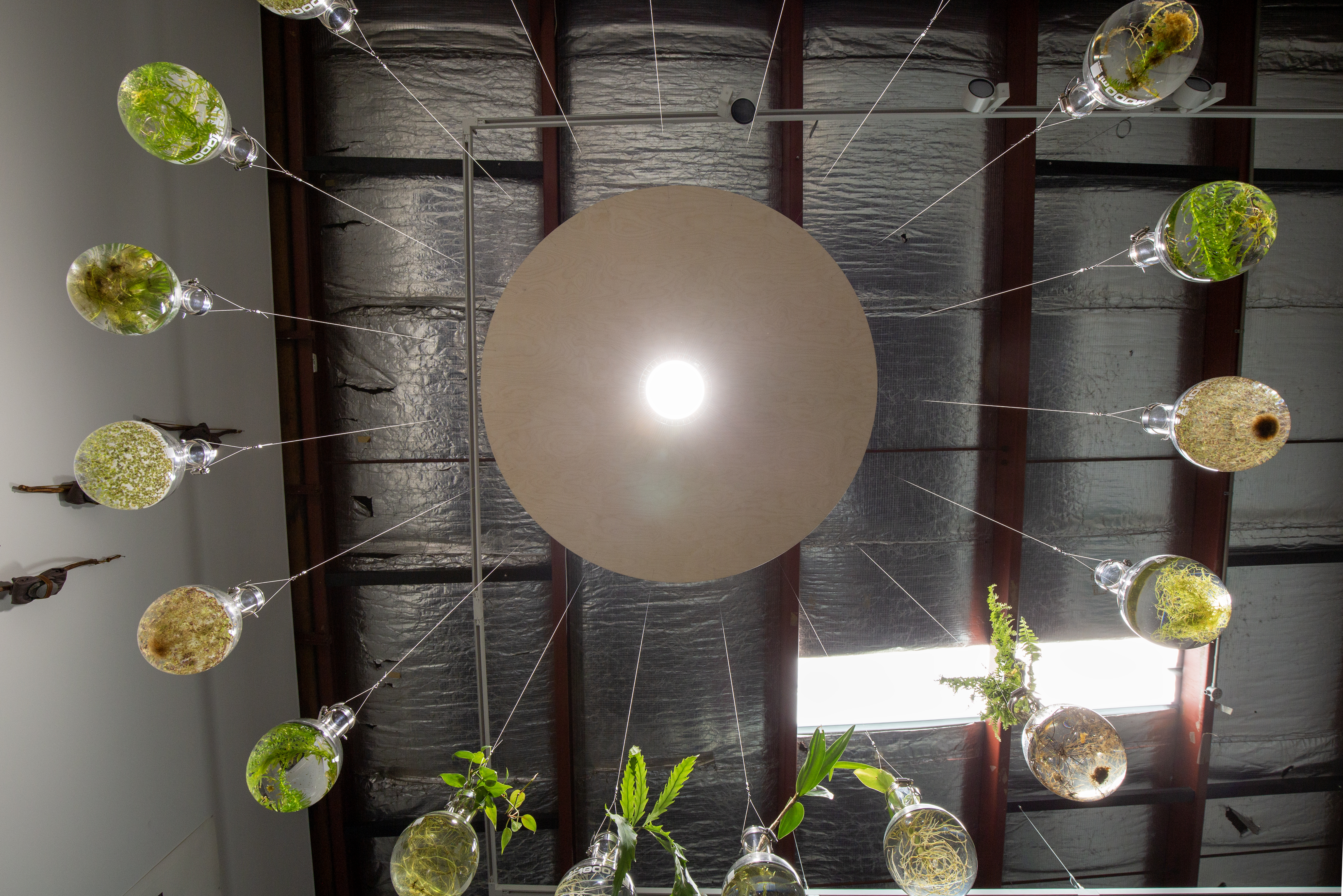
Plywood disc, LED Grow Light, wire, flasks, water and plants
Dimensions approx. 1.7m diameter x 2.3m
Fabrication: Ivo Botev and Nik Kennedy
Images: Garth Henderson
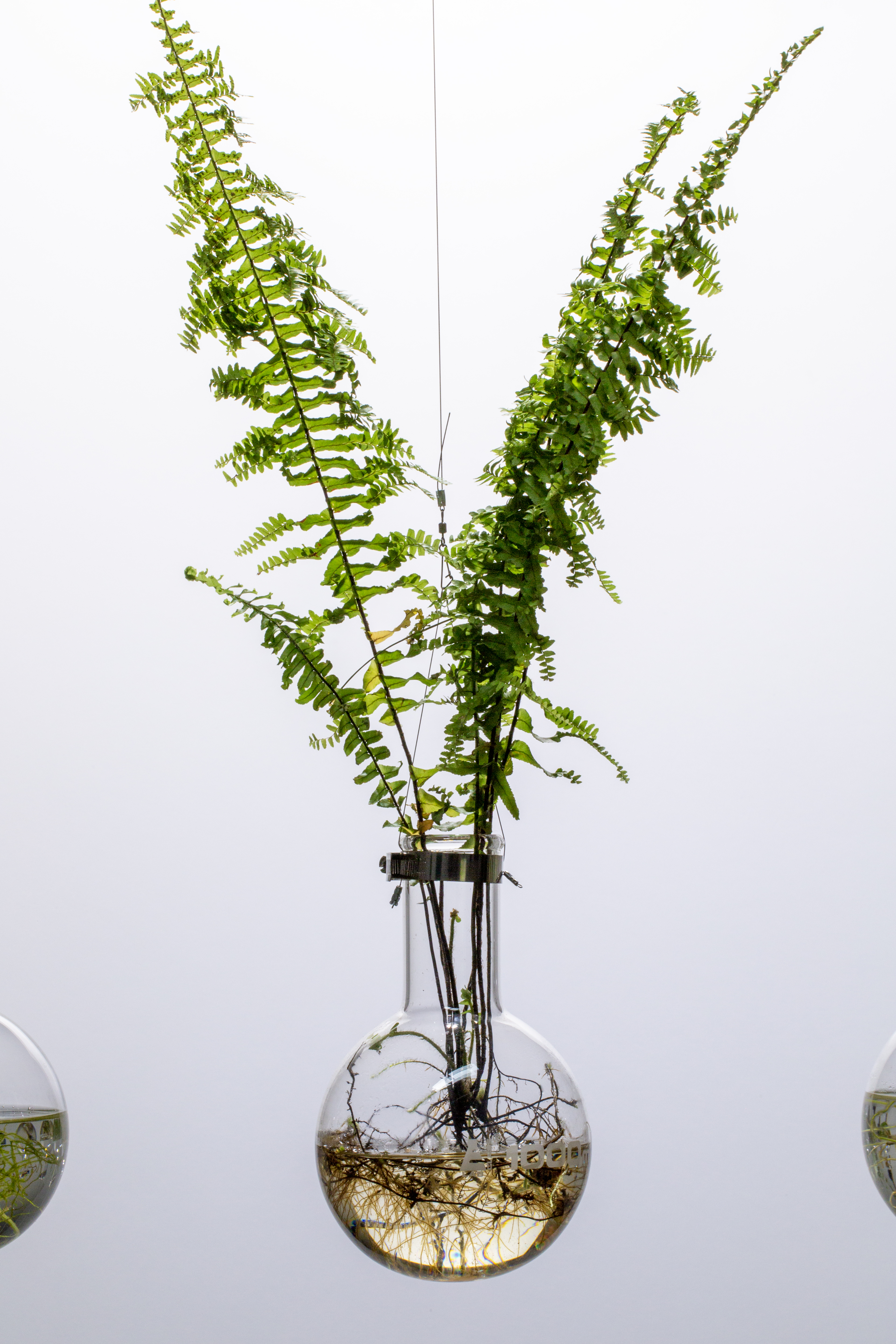
Plant species includes:
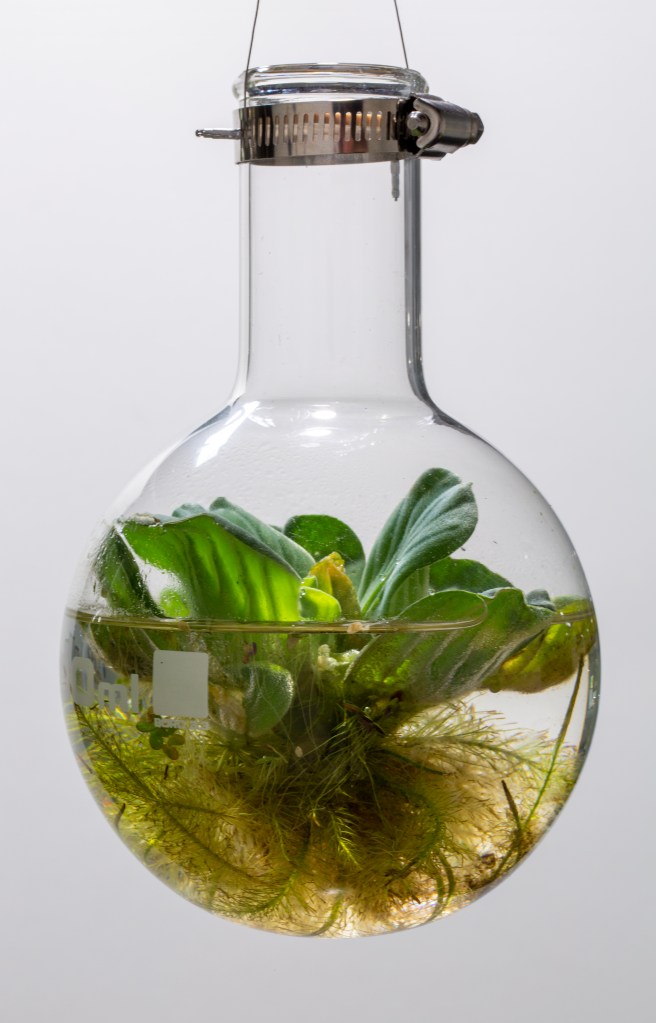
Lemna disperma (Duckweed), Elodea canadensis (Pond Weed), Pistia stratiotes (Water Lettuce), Philodendron hastatum (Silver Sword Philodendron), Nephrolepsis exaltata (Boston Sword Fern), Taxiphyllum barbieri (Java Moss), Dendrobium speciosum (Rock orchid), Rhipsalis sp. and Philodendron cordatum (Heart-Leaf Philodendron).
“To say that forests and marine microbes from the ‘lungs of the earth’ is an understatement. They literally breathe us into being.” (Myers, 2018)1
Breathing is an essential human function, perhaps forming the most fundamental rituals of air flowing in and out of bodies. Be it conscious or unconscious; breathing creates a constant rhythm. In yoga, the breath remains a focused practice, quietening both mind and body. BREATH takes this primary function drawing attention to our oxygen source, plants. This installation aims to improve plant-human relationships by cultivating chlorophilia- a love for plants.
Plants oxygenated the Earth millions of years ago, making life possible. Rainforests produce approximately 30-50% oxygen, with 50-70% provided by marine plant species, phytoplankton, kelp and algal plankton. The vast mass of ocean oxygen is formed by algal bacteria plankton, with one species Prochlorococcus marinus providing perhaps one in five human breaths2.
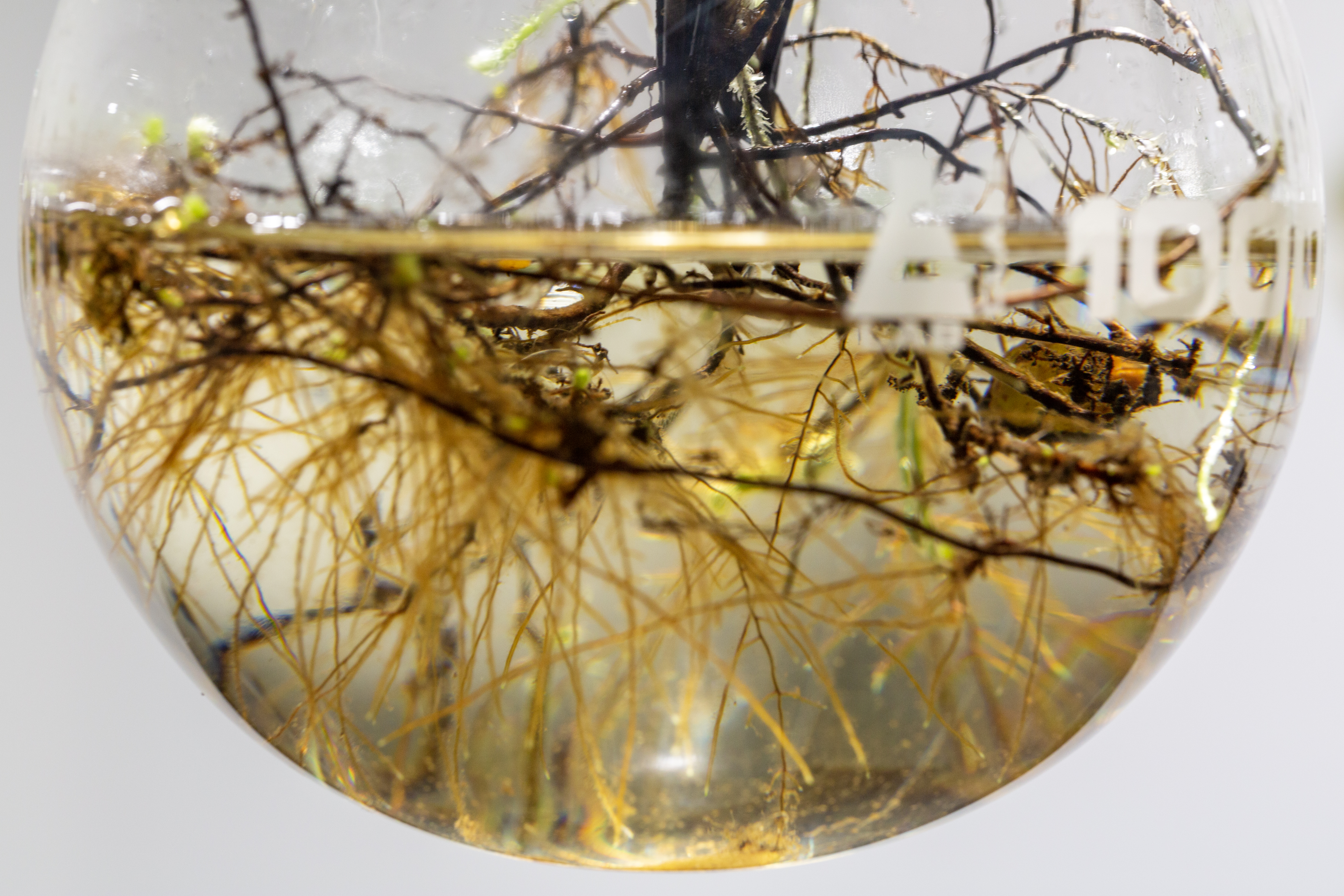
The LED grow light contributes the required light spectrum for plants to photosynthesise. BREATH operates at micro and macro scales, each unable to be comfortably held concurrently in our minds. Some selected plants mimic small-celled oxygenating algae such as Lemna disperma (Duckweed). Growing in water exposes their roots, making the invisible seen; the hovering flasks act as lenses inviting closer observation, microscopic magnifications revealing entangled worlds of which humans are a part.
To co-breathe and conspire with the Plant Kingdom requires further re-assessment of anthropocentric actions and values. In inhaling your next breath of oxygen, gratitude and reverence should be offered first and foremost to plants.
- MYERS, N. 2018. How to Grow Livable Worlds: Ten Not-So-Easy-Steps. In: OLIVER-SMITH, K. (ed.) The World to Come: Art in the Age of the Athropocene. Gainesville: Samuel P.Harn Museum of Art, University of Florida.
 Heather Hesterman