The Edge, Melton Botanic Gardens 2023
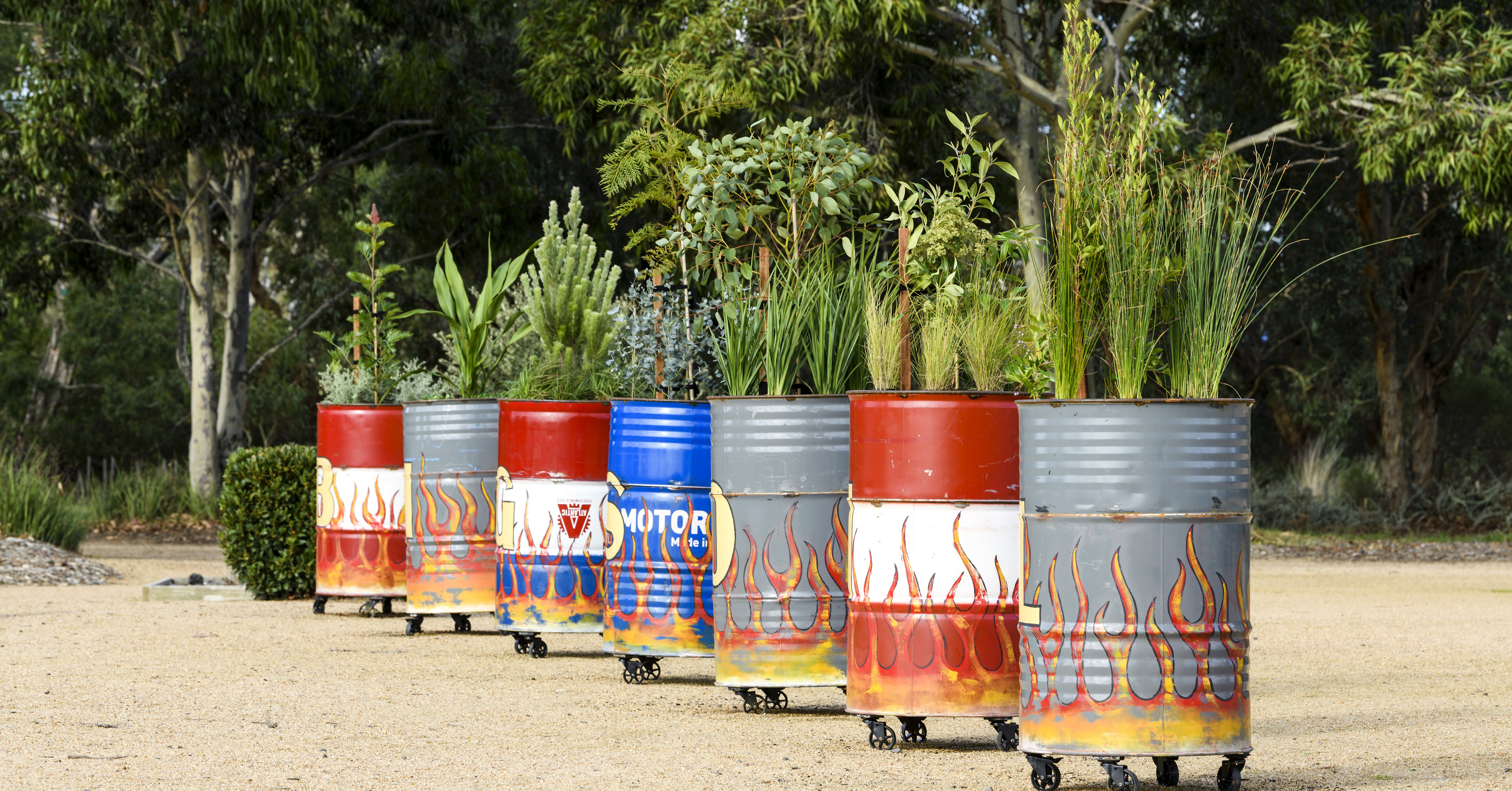
In a series of seven planters presented at Melton Botanic Garden, BIG SOIL instigates a discussion about cars, fuel, and plants through public art.
The City of Melton relies heavily on cars for access to and through the area for education, recreation, work, and health services, with networks of freeways and highways providing essential access to the municipality. Nearby is the Calder Park Raceway, where cars in all their forms are raced and admired.
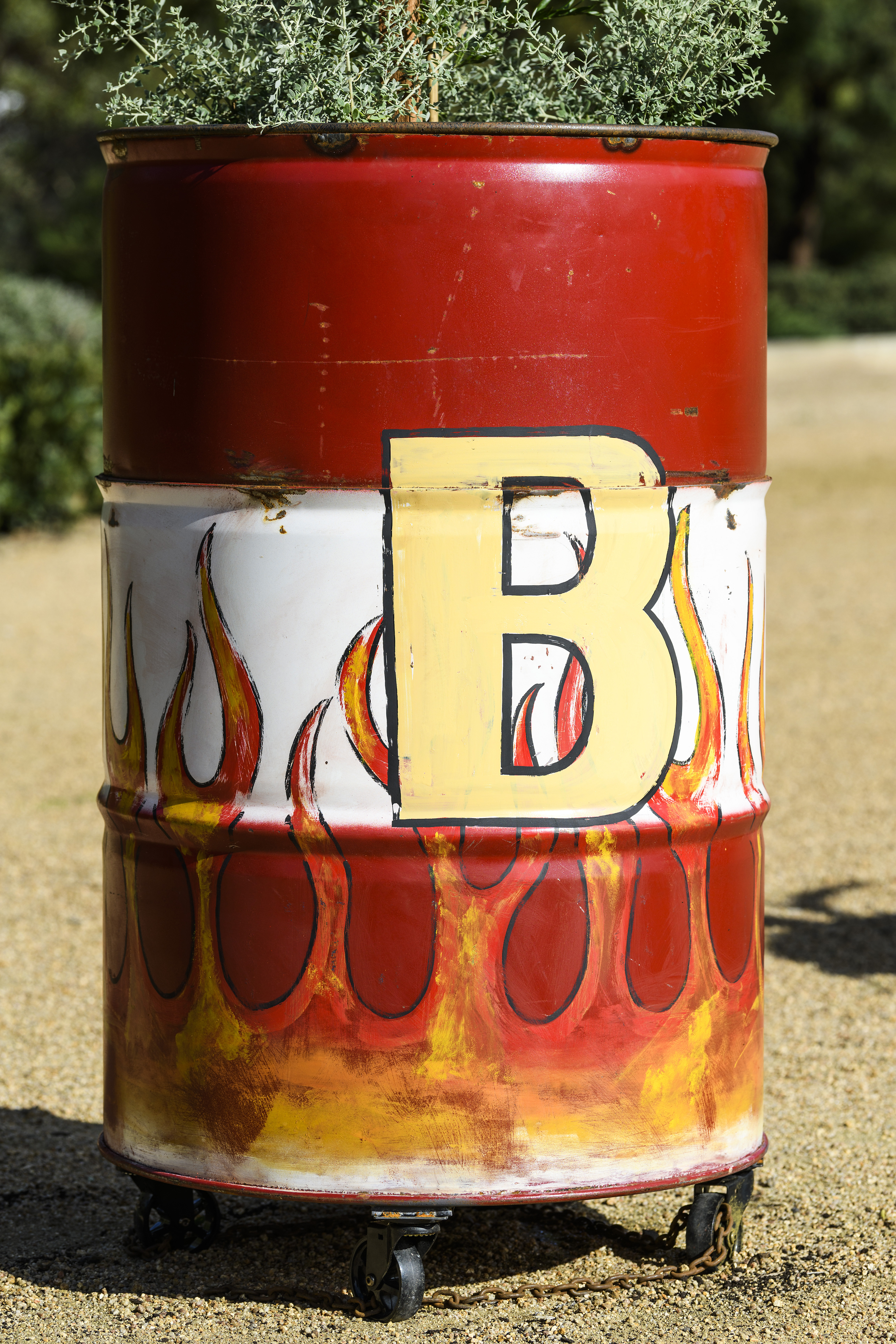
Each planter has been created with an oil drum, modified, mobilised and decorated to house plant life. This direct reference to oil-based fuels alongside the biofuel industry emphasises the crucial transition from fossil fuels and gas for the survival of organisms on planet Earth and the critical role of plants.
Using a range of Australian native plants emphasises the function plants can play in this transition and the essential properties they offer society, such as food, fibre, construction, and medicine. Referencing Bruno La Tour’s ‘critical zone’ (LaTour, 2014), the narrow but liveable and productive soil forms the Earth’s crust; the plants within each drum act as ‘world builders’ (Myers, 2018). Within this art installation, the photosynthesising plants turn sunlight and air into energy for themselves and all creatures. In tandem with bacteria and microorganisms, the selected plants provide habitats and perform soil remediation. The plants are ‘hyperaccumulators’ in this process, meaning they absorb heavy metals from the earth, extracting pollutants from water and soil by storing them in their leaves, roots, and stems.
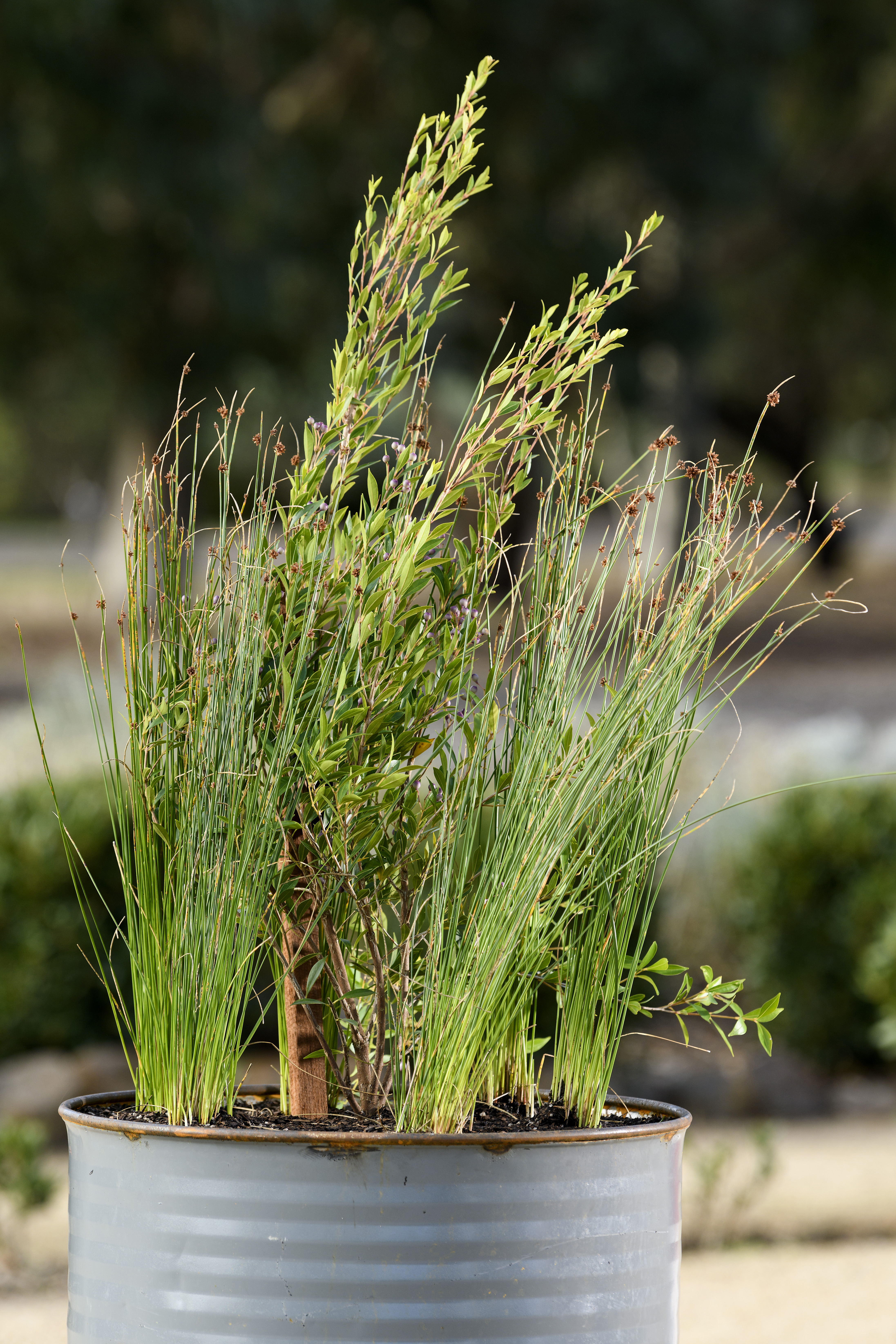
Several of the selected plants, Grevillea robusta, Eucalyptus cladocalyx nana and Themeda triandra have been trialled successfully to store heavy metals. Others such as Rhagodia spinescens, Dianella longifolia, Backhousia citriodora and Acmena smithii Minor have Indigenous usages in weaving and food while other plant species have been selected for their form, hardiness and textures. The plants in this artwork will be gifted to humans and a ‘forever’ home found, as an act of artistic practice to increase better ’human-plant relations.’
 Heather Hesterman